Why Context Changes the Way People Scan QR Codes
A QR code may look exactly the same in every situation.
The person scanning it doesn't.
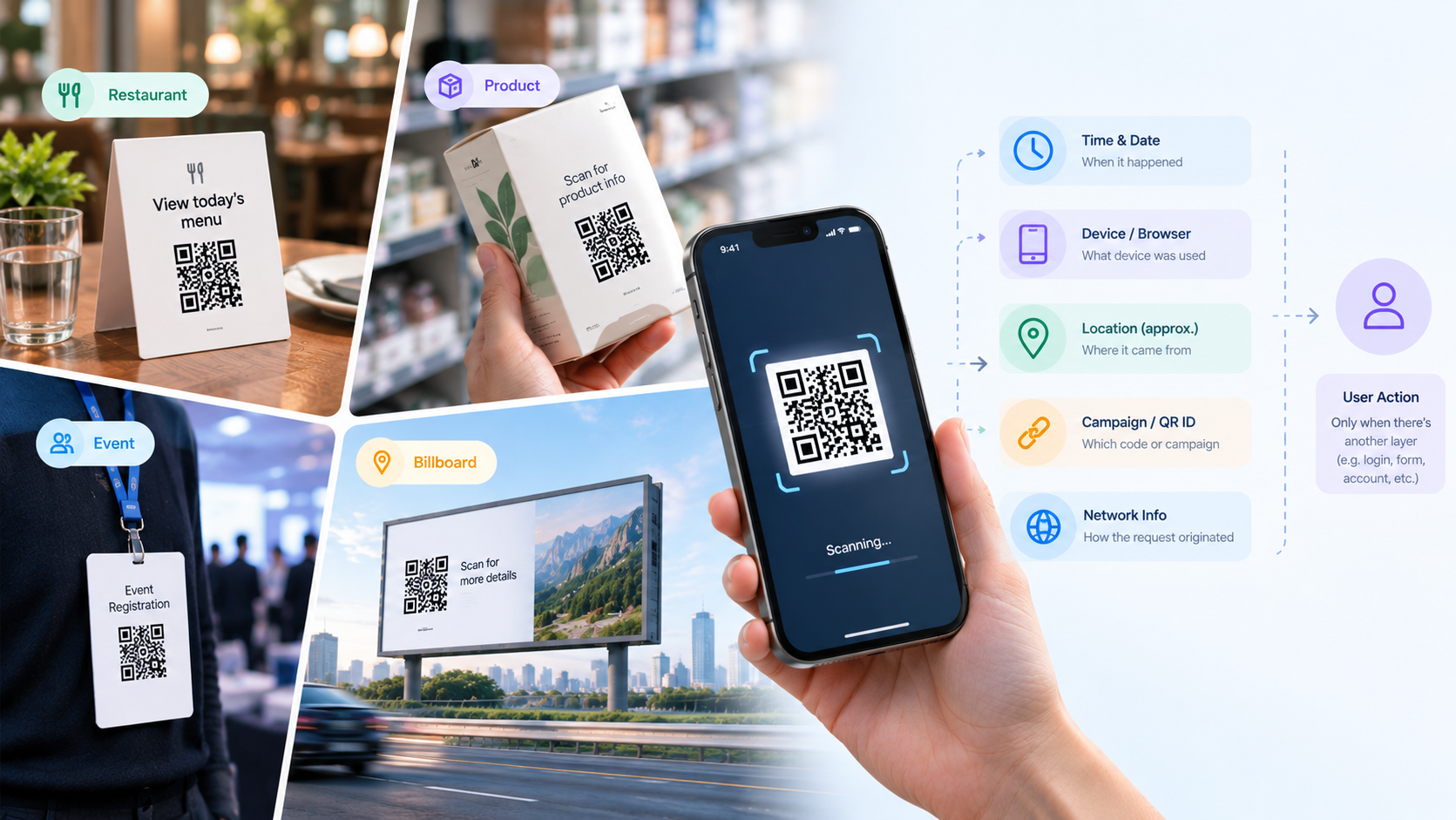
A QR code on a restaurant table, a product package, a conference badge, and a roadside billboard can technically work the same way. But the context around the scan changes user behavior.
And that matters more than many QR implementations account for.
The QR code is only one part of the interaction
Consider these two situations:
Situation 1: A customer sees a QR code on a restaurant table with:
“View today's menu”
The action is obvious. The user is already in the right environment and has a reason to scan.
Situation 2: Someone sees a QR code on a billboard while travelling in a car.
The same technical mechanism exists, but the user's attention, available time, environment, and intent are completely different.
The QR code didn't change.
The context did.
Context affects scan behavior
Several factors can influence what happens before and after a scan.
1. Physical environment
Where the QR code appears matters. A QR code on a product package can be scanned while someone is holding the product. A QR code on a poster may require the user to position their phone from several feet away.
A QR code inside a busy retail environment competes with surrounding visual information. The physical environment creates different levels of friction.
2. User intent
Not every scan starts with the same motivation.
Someone might scan to:
Read a menu
Access product information
Download something
Register for an event
Make a payment
Claim an offer
Continue an offline-to-online experience
The clearer the relationship between the QR code and the user's immediate goal, the easier it is to understand why the scan happened.
3. Time pressure
Context also determines how much attention a user can give the interaction.
A QR code encountered while waiting in a queue provides a very different opportunity from one encountered while walking through a crowded area.
This creates an important UX question:
Does the QR experience match the amount of attention the environment allows?
A complicated landing page may work in a relaxed environment but perform poorly when the user expects an immediate result.
Scan data needs context too
This becomes particularly important when analyzing QR campaigns with platforms such as Digital QR, where scan activity can be used to understand how QR campaigns perform across different contexts.
Suppose two campaigns generate:
Campaign A: 5,000 scans
Campaign B: 2,500 scans
The numbers alone don't explain why.
The campaigns may have different:
Physical locations
Audience types
Visibility
Calls to action
User intent
Time windows
Environmental constraints
Post-scan experiences
Treating the scan count as the complete story can hide these differences.
A useful model is:
Context
   ↓
User Intent
   ↓
QR Interaction
   ↓
Scan Event
   ↓
Landing Experience
   ↓
User Action
The scan is one event inside a larger journey.
Design the experience around the context
Before generating a QR code, ask a few practical questions:
Where will it be seen?
Who is likely to see it?
What are they trying to accomplish?
How much attention do they have?
What should happen immediately after the scan?
These questions can influence everything from the QR code's placement and surrounding copy to the destination experience.
The technical takeaway
A QR code is not an isolated interface.
It sits between a physical environment and a digital experience.
That means developers and product teams should analyze more than whether the code works technically.
A successful implementation should consider the entire interaction:
Environment → Intent → Scan → Experience → Action
The next time a QR campaign produces unexpected scan behavior, the question may not be:
“Is the QR code working?”
It might be:
“What is happening around the QR code?”